Lubricant Prices Are Up This Year. Here’s How to Change Your Oil Less Often.

What an oil change really costs
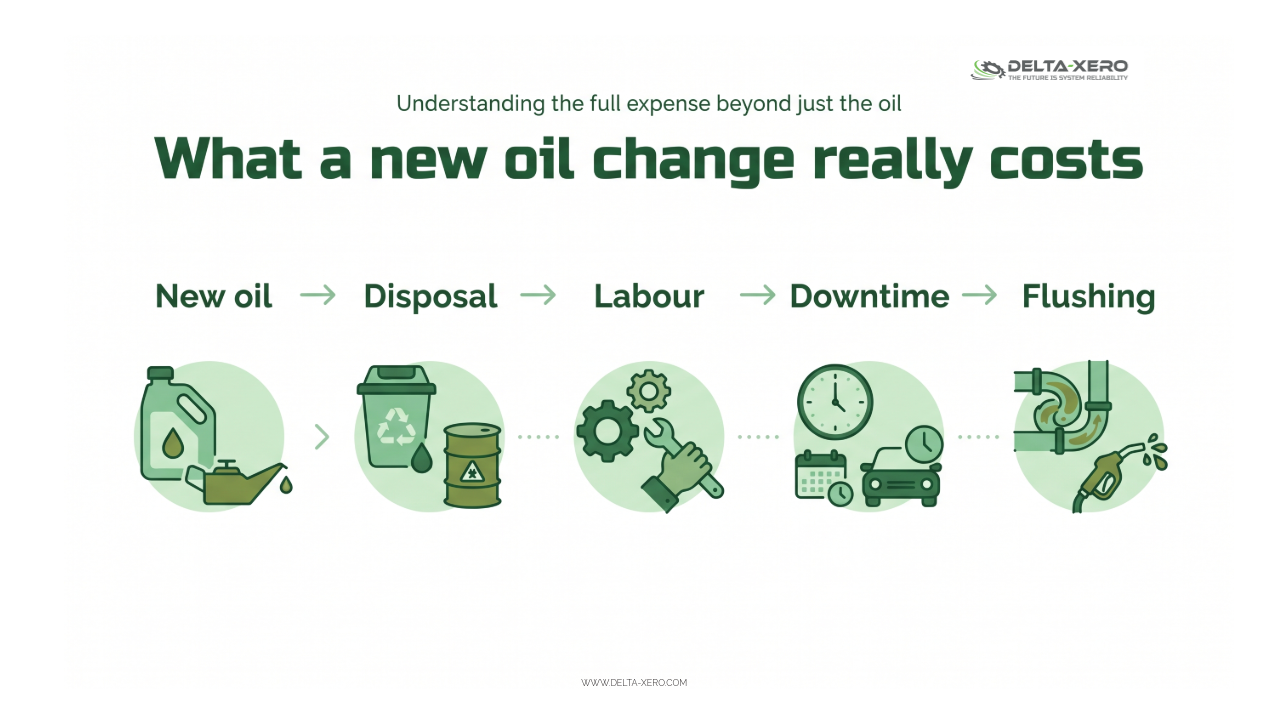
The invoice for new oil is the visible part. The full cost of every change includes:
- New oil, now at 2026 prices
- Disposal of the old oil as hazardous waste
- Labour to drain, flush and refill
- Downtime while the machine is off
- Flushing oil and filter elements used along the way
On a gas engine that takes around 500 litres a change, every avoided change saves 500 litres of new oil and 500 litres of waste oil. Multiply that by the number of engines, gearboxes and hydraulic systems on site and the number grows quickly. When base oil costs move the way they have this year, so does every line on that list that involves buying oil.
Most oil is changed because it’s dirty, not because it’s worn out
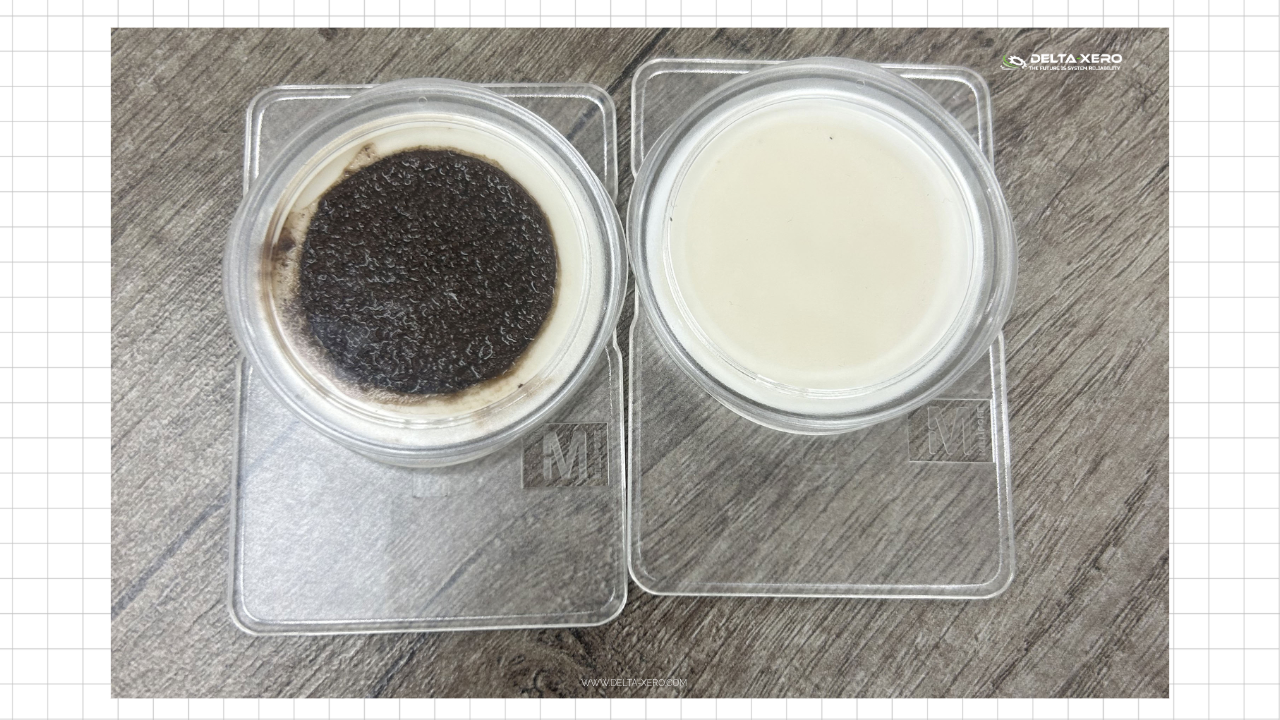
Here is the part that matters most for your budget.
Most industrial oil gets changed for one of two reasons: a fixed interval on a calendar or an hour meter, or because contamination has made it unfit to use. Very little gets changed because the oil itself has reached the end of its life.
The usual culprits are:
- Particles, including wear metals and dirt drawn in from the environment
- Water, from condensation, washdown or seal leaks
- Varnish and oxidation products, which form deposits on cool surfaces and valves
- Siloxane and silicon, in landfill and biogas engines
These aren’t just a symptom. Water and metal particles speed up oxidation, so dirty oil ages faster than clean oil. Remove the contamination and you remove one of the main things driving the next oil change.
To be clear about the limits: filtration doesn’t put back additives that have been used up. If an oil’s additive package is genuinely depleted, it needs changing. The point is that you should know that from data, not assume it from a date.
Change oil on condition, not on the calendar
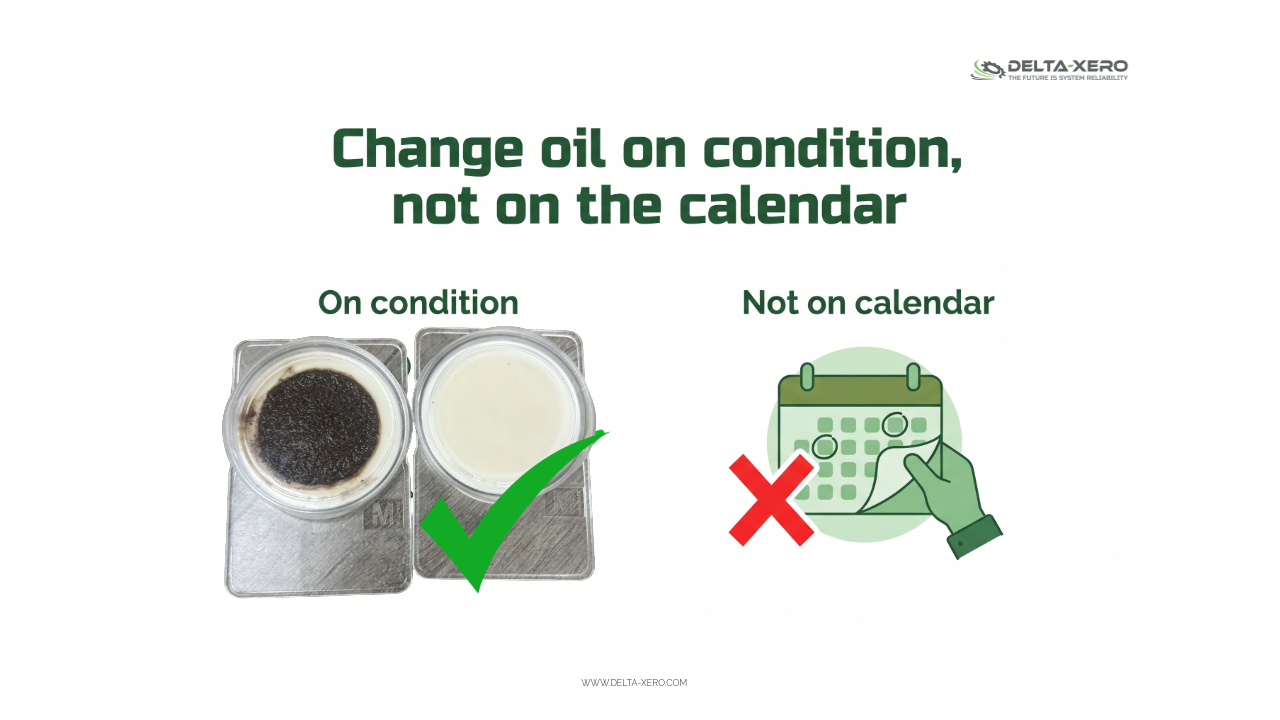
Moving from time-based changes to condition-based changes is the single biggest lever on lubricant spend. It takes three things.
1. Test the oil you have. A proper oil analysis tells you what’s actually in the fluid: particle count (ISO 4406), water content, varnish potential (MPC), wear metals and additive levels. If you’re not sure what a report is telling you, we’ve written a guide to reading a hydraulic oil analysis report.
2. Trend it. One result tells you very little. A series of results tells you which way the oil is heading, and whether the next scheduled change is actually needed.
3. Keep it clean. Analysis tells you when oil is contaminated. Fine filtration stops it getting there. Delta-Xero offline systems run alongside the machine and remove particles, water, varnish and oxidation products down to 0.1 micron. That’s well below the 4-micron floor that ISO 4406 even counts, so the oil stays in a condition worth keeping.
What this looks like on real sites
Landfill gas engines: 48 oil changes a year down to 7. At a renewable energy generating plant, a landfill gas engine taking around 500 litres a change needed roughly 48 oil changes a year. Long-term testing with Enovert, verified by independent laboratory analysis, brought that down to 7. Per engine, per year, that’s 20,500 litres less new oil, 20,500 litres less waste oil, 41 fewer changes and around 45 tonnes less CO₂. Read the case study.
Biffa: a 5,000-litre oil change avoided. A £500,000 hydraulic baler at Biffa suffered five major breakdowns in six months: two pump failures, three valve failures and £15,000 in repair costs. After a Delta-Xero system was installed, particles above 14 microns fell by 99.98% within weeks and there were no further breakdowns. A full 5,000-litre oil change was avoided, and the existing oil can stay in service. Read the Biffa case study.
Gas engines across several sites: 67% fewer oil drains. Field testing on CAT and Jenbacher landfill gas engines cut silicon and related abrasive contamination by 63%, oil drains by 67.4% and annual costs by 46%. Read the case study.
Where to start this week
- Pull last year’s lubricant spend and count how many changes were made on schedule rather than on test results.
- Pick your three thirstiest assets: the ones using the most oil or changed most often.
- Get a baseline sample from each before the next scheduled change.
- Defer the change if the oil passes. Re-test at the interval instead.
- Fix the contamination source on anything that fails, so the new oil doesn’t go the same way.
The point
Oil prices are set on global markets, and this year has shown how quickly they move. How often you replace your oil is set on your site. When every litre costs more, the cheapest litre is the one you don’t have to buy.
Lubricant costs and oil life: the questions we get asked
01Why are lubricant prices going up in 2026?
02How can I reduce how much I spend on lubricants?
03How long can industrial oil last if it’s kept clean?
04What is a condition-based oil change?
05Does filtration replace oil changes completely?


Our thoughts on other industries
Real-world fluid conditioning results from sectors adjacent to yours — see how offline nano-filtration performs across our other industry case studies.


