Fuel Polishing vs Tank Cleaning: Which One Does Your Site Need?

01. Why stored diesel goes bad in the first place
Diesel is not a stable product. Left alone in a tank, four things happen to it.
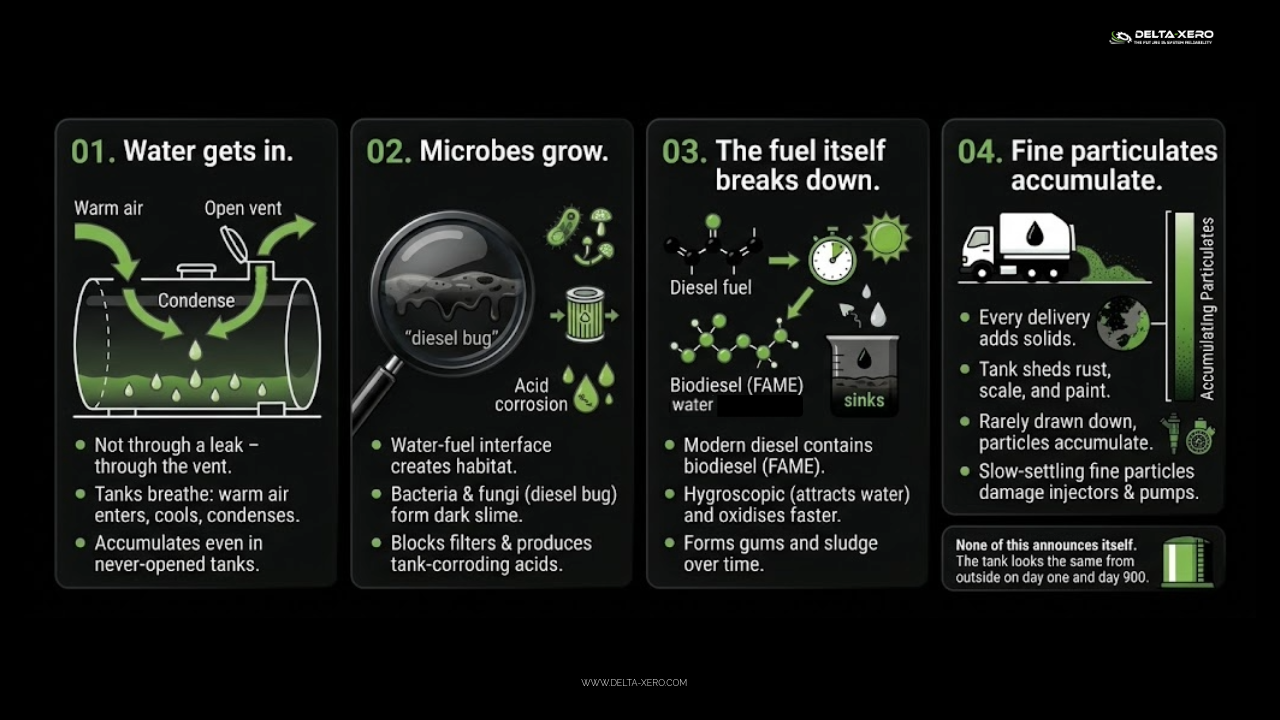
Water gets in. Not usually through a leak - through the vent. Tanks breathe. Warm air enters during the day, cools overnight, and the moisture in it condenses on the tank wall and runs to the bottom. A tank that has never been opened will still accumulate water.
Microbes grow. Where water meets fuel, you get an interface, and that interface is where bacteria and fungi live. This is what the industry calls diesel bug. It produces a dark, slimy biomass that blocks filters, and its by-products are acidic, which corrodes the tank from the inside.
The fuel itself breaks down. Modern diesel contains biodiesel (FAME) content, which is hygroscopic - it actively attracts water - and oxidises faster than older fuel formulations did. As it oxidises it forms gums and sludge that drop out of suspension.
Fine particulates accumulate. Every delivery carries a small solid load into the tank, and rust, scale and paint shed from the tank itself over time. Nothing removes any of it. In a tank that is rarely drawn down, particulate levels only travel in one direction - and the finest particles, the ones that do the most damage to injectors and pumps, are the slowest to settle out.
None of this announces itself. The tank looks the same from outside on day one and day 900.
02. What tank cleaning does
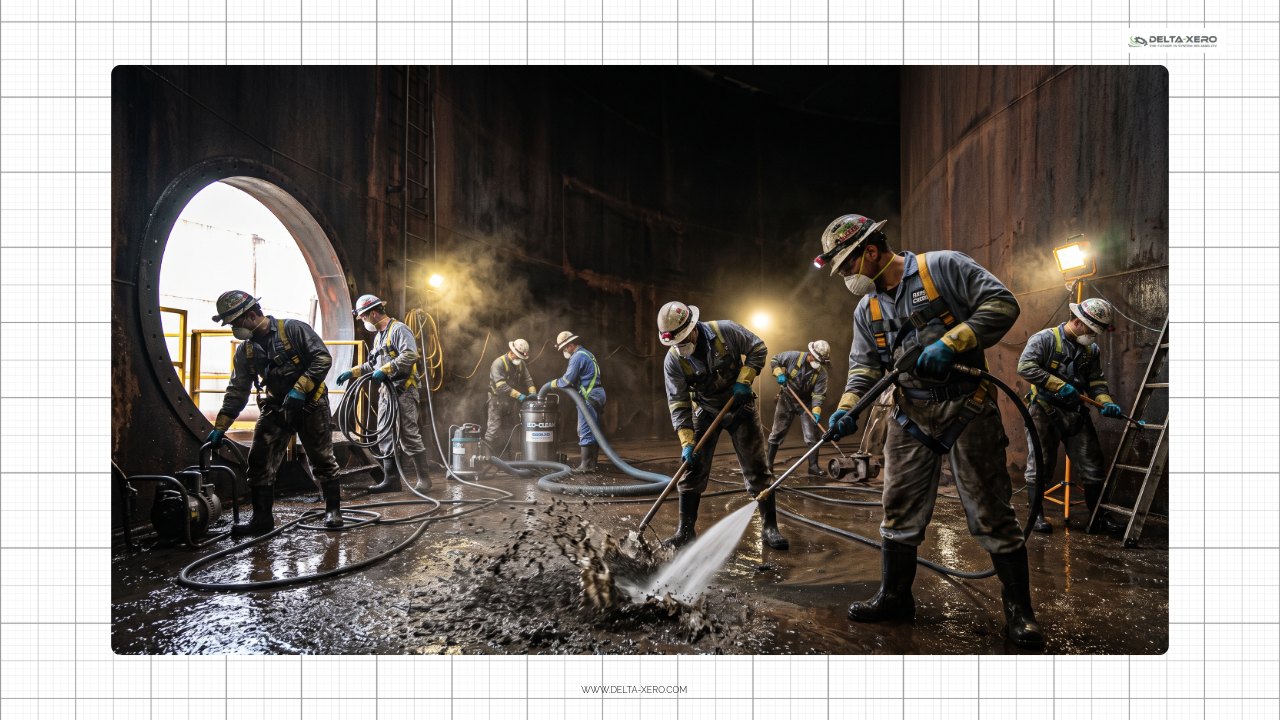
Tank cleaning is a one-off remediation job. A contractor comes to site and:
- Drains or displaces the fuel
- Enters or accesses the tank
- Physically removes sludge, scale, biomass and water from the tank floor and walls
- Disposes of the waste
- Refills, usually with new fuel
What it is good at: removing heavy settled contamination and deposits that have bonded to the tank floor and walls. Where material has hardened onto the tank structure rather than remaining drawable into circulation, physical removal is the reliable route - fuel polishing cannot be assumed to lift every accumulated deposit.
What it costs you: downtime, confined-space entry procedures, and disposal of both the sludge and often the fuel itself. It is a project, not a routine.
The part nobody mentions: the day after a tank clean, the tank is spotless and the clock starts again. Nothing about the cleaning process stops water condensing on the wall next week, and nothing stops the microbes returning - because the conditions that grew them have not changed. Sites that clean tanks on a rolling three-year cycle are usually treating a symptom on repeat.
03. What fuel polishing does
Fuel polishing is a continuous or periodic conditioning process. Fuel is drawn from the tank, passed through a filtration system that removes water and particulates, and returned to the tank. The fuel stays where it is. The tank stays sealed.
The important difference is what it targets. A conventional fuel filter is a barrier - it catches particles above its rated size on the way to the engine. A polishing system is a treatment - it circulates the whole tank volume repeatedly, progressively removing contamination that a barrier filter would only see once it was already on its way to the injectors.
Delta-Xero's DX Powertrain fuel and engine oil systems filter to 0.1 micron using zero-bypass nano-filtration cartridges, removing 99.8% of particulate contamination and 99.5% of water content. That water figure matters more than the particulate one for stored fuel, because water is what feeds the microbial growth in the first place. Take the water out and you remove the conditions diesel bug needs.
A properly specified polishing system is not limited to loose particles. Delta-Xero cartridges remove water, particulates, bacteria and fungal growth, asphaltenes and wax deposits - the material that makes up most of what accumulates in a neglected diesel tank.
What it is good at: keeping good fuel in good condition, and bringing degraded fuel back to a usable standard. The test is whether the contamination can still be moved - suspended in the fuel, or loose on the tank floor - rather than set hard onto the tank itself.
Where it has limits: deposits that have hardened onto the tank structure may not be recoverable by circulation alone. That is the case for physical cleaning, and a sample will tell you which situation you are in.
04. Which one does your site need?
Some sites need both. Plenty need only one. When both are needed, the order matters: remediate severe tank contamination first, then condition the fuel to help prevent recurrence.
| Situation | What you need |
|---|---|
| Tank has heavy visible deposits, or has never been cleaned in 5+ years | Assess for physical cleaning first, then polish |
| Fuel is dark, hazy, or smells sour, but the tank is otherwise sound | Polish - the fuel is often recoverable |
| Filters on the generator are blocking sooner than they should | Polish, and test before you spend on a clean |
| New tank, new fuel | Polish from day one - you are protecting an asset, not fixing one |
| Fuel that will sit for more than 6–12 months | Polish, continuously or on a scheduled cycle |
The sequencing point is the one that saves money. Cleaning restores the tank, but it does not change the conditions that filled it. Where the underlying cause is water ingress and microbial growth, conditioning the fuel afterwards is what reduces the odds of booking the same job again.
One thing worth knowing before you commit to a clean: where the tank is structurally sound, with no significant corrosion and no large volume of free water sitting in it, Delta-Xero can often remediate fuel that would historically have been condemned and sent for disposal. That is not a guarantee - a corroded tank or one holding standing water still needs physical work - but it is common enough that testing first can save the cost of both the clean and the replacement fuel.
Not sure which side of that table you are on? A fuel sample answers it in a fortnight, and it costs nothing - request a free fuel and oil analysis and we will tell you what condition the fuel is actually in before anyone quotes you for anything.
05. Where this bites hardest: standby power
The worst case for stored fuel is a tank that is full, rarely drawn down, and absolutely critical when it is finally needed.
That describes standby generator fuel at data centres, hospitals, telecoms exchanges and water treatment sites. A hyperscale or colocation facility may hold enough diesel for 24 to 72 hours of full-load running, refreshed only when it is used - and it is almost never used.
Routine generator testing can create false confidence. A successful engine run confirms that the generator operated on the fuel it drew during that test. It does not necessarily confirm the condition of the fuel at the lowest point of the storage tank - and water and microbiological growth tend to accumulate at tank low points.
How much a given test actually tells you varies by installation: suction height, day tank arrangement, transfer routing and test duration all change which fuel the engine sees. A genuine extended outage is often the first time a system draws deeply on stored fuel, which is the worst possible moment to find out.
Several units in the DX Powertrain range are configured specifically for this: the DX1003-W-PT is a three-cartridge wall-mounted unit built to maintain fail-safe operation in critical standby power systems, and the DX1003-T-PT is optimised for bulk fuel storage. Both use SS316 construction, and both condition the fuel in place without taking the tank out of service.
The same problem shows up at sea, where salt and moisture make it worse - our marine fluid conditioning case studies cover propulsion, steering and backup power systems facing the same contamination profile in a harsher environment.
06. How to check before you buy either service
Do this before you accept a quote for a tank clean.
-
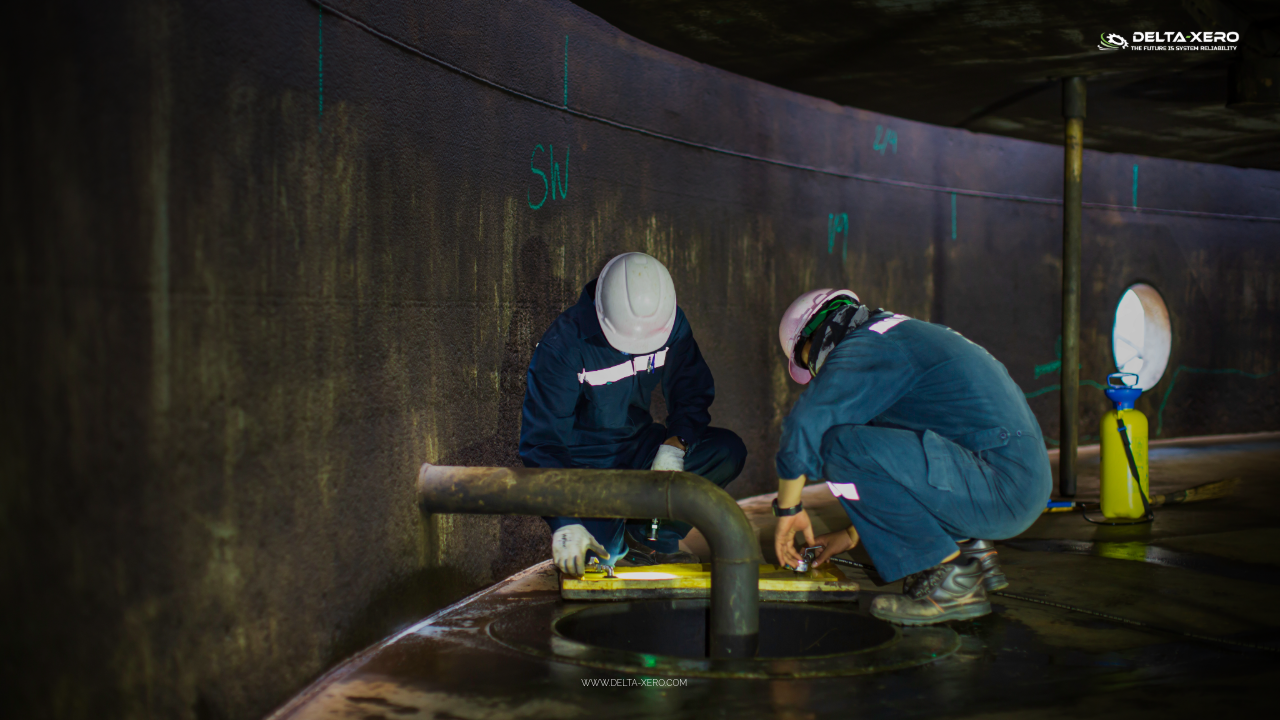
Take top, middle and bottom samples. Three depths is best practice, because the distribution tells you as much as the presence - contamination confined to the bottom is a different problem from contamination throughout. If you can only take one, take the bottom sample. Water and biomass are dense and settle at the lowest point, so a top-drawn sample will look clean even when the tank is in trouble.
-
Test for water content and particulate count. These are the two numbers that separate "polishable" from "needs physical removal". Our filter performance and measurement service codes solid-particle contamination using ISO 4406. Fuel specification is a separate question: BS EN 590 sets requirements and test methods for automotive diesel, BS 2869 covers stationary and heating grades, and ISO 8217 applies to marine fuels including marine gas oil. Know which one governs your installation before you benchmark against it.
-
Check your filter change records. Rising change frequency on the generator's own filters is the earliest cheap signal you have, and most sites already hold this data without looking at it.
-
Look at how long the fuel has been there. Over 12 months without conditioning, assume it needs attention regardless of what the paperwork says.
If you are already running oil analysis on other assets, the reading principles transfer directly - our guide on how to read an oil analysis report covers what the numbers mean and which ones justify acting on.
07. The short version

- Tank cleaning removes what has settled and bonded to the tank. One-off, disruptive, and the reliable answer where deposits are physical.
- Fuel polishing continuously removes water, particulates, microbial matter, asphaltenes and wax from the fuel, and addresses the conditions that create sludge in the first place.
- Where both are needed, clean first and condition afterwards - otherwise the same contamination returns.
- Test before you buy either. The sample decides it, not the quote.
If you want to know which one applies to your tanks, start with the sample. Request a free fuel analysis, or talk to us about your storage volume and duty cycle and we will tell you honestly whether polishing is the right call.
The `Wait, One More Thing` Section
01How long can diesel be stored before it goes bad?
02What is diesel bug, and can filtration remove it?
03Will a standard fuel filter do the same job as polishing?
04Does the tank have to be taken out of service to polish fuel?
05How often should stored diesel be tested?


Our thoughts on other industries
Real-world fluid conditioning results from sectors adjacent to yours — see how offline nano-filtration performs across our other industry case studies.


