"> ">
Industrial Fluid Insights June 4th, 2026

MPC Varnish Test Explained: What ASTM D7843 Means for Oil Analysis and Varnish Removal

Varnish Depth - 100x under microscope | oil analysis

The MPC varnish test is one of the most useful oil analysis methods for understanding whether an in-service oil is carrying varnish-forming contamination. For maintenance managers, reliability engineers and power generation teams, a high MPC result is not just a lab number. It can indicate a higher risk of sticking valves, filter blockages, sludge build-up, poor oil performance and unplanned downtime.

This article explains what ASTM D7843 measures, why MPC results should be read alongside ISO 4406 particle counts and micro-patch analysis, and how offline oil filtration can help reduce varnish potential before it becomes a reliability issue.

sample oil patch test

01

What is the MPC varnish test?

Varnish

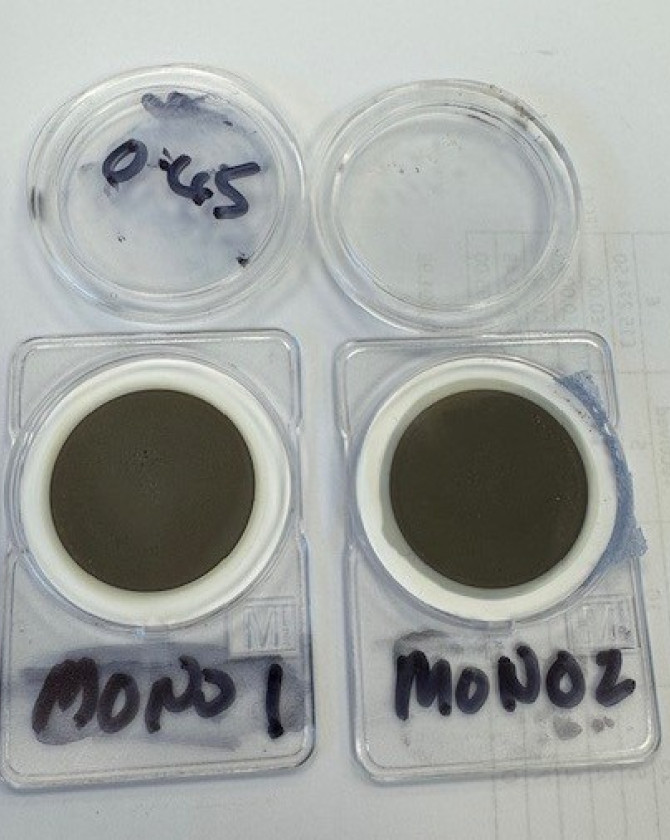
MPC stands for Membrane Patch Colorimetry. In simple terms, it is a varnish potential test used in oil analysis to show how much insoluble degradation material is present in the oil. Under ASTM D7843, insoluble contaminants from an in-service turbine oil sample are collected on a membrane patch. The colour of that patch is then measured by a spectrophotometer and reported as a Delta E value on the CIELAB colour scale.

This matters because varnish is not always obvious from a standard visual oil check. Oil can look acceptable while still carrying oxidation by-products, soft contaminants and varnish precursors that can later deposit onto valves, bearings, servo systems, gearbox internals or reservoir surfaces. The MPC varnish test gives maintenance teams a practical way to trend this risk before a machine becomes harder to control, less efficient or more vulnerable to downtime.

Example of Varnish

02

Why varnish potential matters in turbines, gearboxes and hydraulic systems

Potential matters

Varnish is a sticky degradation product that can form when oil oxidises, overheats, becomes contaminated, or loses its ability to keep degradation material in suspension. In critical systems, varnish can contribute to filter blockages, sticking control valves, restricted oil flow, poor heat transfer and reduced component protection.

This is particularly important in power generation, wind turbine gearboxes, industrial hydraulics and other high-value machinery where downtime is expensive. In one Delta-Xero power generation case study, a natural gas-fired combined cycle power station was experiencing valve issues linked to oil degradation and filter blockages. Oil analysis showed high varnish build-up in turbine loop systems, creating a risk to reliability and contractual energy supply commitments.

For this reason, MPC should not be seen as a “nice to have” test. It is a useful condition monitoring signal when the operational question is: is this oil still protecting the asset, or is it starting to carry material that may create deposits and reliability problems?

MPC test by Delta-xero

03

Why ISO 4406 and standard oil analysis do not always show the full picture

ISO 4406 and standard oil analysis
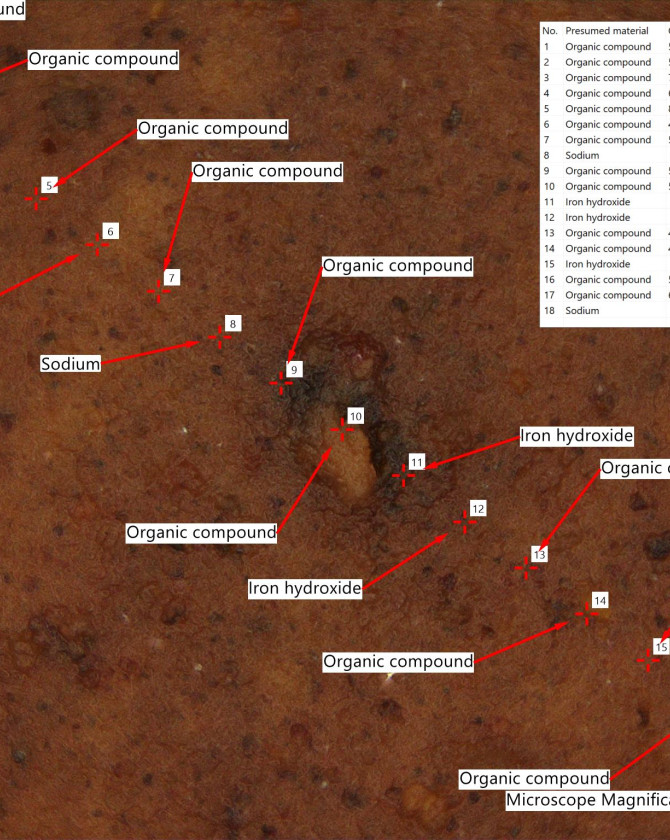
ISO 4406 particle count is important, but it is not the same as varnish potential. ISO 4406 is mainly about particle cleanliness, typically reported at particle sizes around 4 microns, 6 microns and 14 microns. MPC is different because it focuses on insoluble colour bodies and varnish-forming material.

The difference matters in real machinery. In Delta-Xero’s GE 1.5MW wind turbine gearbox trial, the team found that previous oil analysis without MPC varnish and micro-patch ferrography did not show the true picture of oil condition. The trial notes reported that years of contamination were sitting in the gearbox as varnish, sludge, depleted additive and particulate. The same trial also recorded that MPC varnish showed a dramatic reduction after Delta-Xero offline filtration, while the oil viscosity was not adversely affected and moisture was removed.

This is why a serious oil analysis programme should not rely on one number alone. Particle count, MPC varnish testing, water content, additive health, viscosity, wear metals and micro-patch images all give different parts of the condition picture. For reliability teams, the stronger approach is to trend them together and interpret them against the equipment, oil type and duty cycle.

Delta-xero MPC test varnish and sodium

04

What does a high MPC result mean and what should you do next?

The Result

A high MPC result should be treated as a warning signal, not as a standalone verdict. It suggests that the oil may be carrying a higher level of varnish-forming insoluble material. However, the correct response depends on the asset, oil type, operating temperature, contamination history, recent oil changes, filter history and trend data.

The first step is to avoid making decisions from one test in isolation. Review the MPC trend, ISO 4406 particle count, water content, viscosity, additive condition and any available micro-patch images. Then inspect the operational symptoms: are filters blocking early, are valves sticking, are temperatures rising, is equipment becoming harder to control, or are oil changes becoming more frequent?

If varnish potential remains high, the practical next step is usually oil conditioning rather than simply replacing oil. An oil change may remove the fluid in the tank, but it may not remove varnish and sludge already attached to internal surfaces. In Delta-Xero’s wind turbine work, filter debris analysis showed that continuous offline filtration removed varnish, contaminant debris and moisture from the gearbox into the filter. The report also explains that as oil is continuously cleaned, the restored oil can begin absorbing contamination stuck to internal surfaces so the filtration process can keep removing it.

before and after Fluid comparison - Delta-xero

05

How Delta-Xero uses oil analysis and offline filtration to reduce varnish risk

Delta-Xero’s approach

Delta-Xero’s approach is based on sample-led fluid conditioning, not guesswork. The company manufactures offline fluid conditioning systems for hydraulic oil, lubrication oil, fuel oil and other operating fluids used across sectors including energy, construction, marine, waste management and manufacturing. Its filtration technology removes water, siloxane, varnish, particulates and salts down to 0.1 micron.

For varnish-related applications, the aim is not only to filter visible contamination. The goal is to return oil to a healthier condition and keep it there continuously, so it can lubricate, protect, cool and clean the equipment more effectively.

There is field evidence behind this approach. In a landfill gas engine trial, independently verified laboratory analysis showed oil life extended by 7.2 times, with oil exchanges reduced from approximately 48 to 7 per year. In a separate wind turbine gearbox oil case study, 10-year-old condemned gearbox oil was filtered for 22 hours, with particle reductions reported at 94.5 percent for 4 micron and 6 micron particles and 97.6 percent for 14 micron particles after partial filtration. The case study reported that the oil was confirmed as fit for reuse by independent laboratory reports and by the oil producer’s laboratory.

For a maintenance or reliability team, the value is practical: fewer unnecessary oil changes, better contamination control, stronger condition monitoring and a clearer basis for deciding whether oil should be filtered, monitored or replaced.

If your latest oil analysis report shows high MPC varnish potential, rising ISO particle counts, water contamination or repeated filter blockages, send us an oil sample. Delta-Xero can assess the contamination profile, review the likely root cause and recommend the most suitable offline filtration unit for your system

The 'Wait, One More Thing' Section

01What does the MPC varnish test measure?

It measures lubricant-generated insoluble colour bodies collected on a membrane patch and reports the result as a Delta E value. It is mainly used as a varnish potential and condition monitoring trend test.

02Is MPC the same as ISO 4406?

No. ISO 4406 reports particle cleanliness. MPC indicates varnish-forming insoluble material. Both are useful, but they answer different questions.

03Can filtration reduce varnish potential?

Yes, the right offline filtration and oil conditioning approach can reduce contamination and varnish-forming material. The best method depends on oil type, operating conditions and oil analysis results.

04Should oil be changed if the MPC result is high?

Not automatically. A high MPC result should be interpreted with trend data, ISO particle count, water, viscosity, additive health and equipment symptoms. In many cases, oil conditioning can be more useful than simply changing oil.

contact us

Ready to transform your oil management?